Slicer 2025 Wrap-Up
Looking back on the last 3 and a half months since the public release of Slicer.
As 2025 draws to a close, we're looking back on the last 3 and a half months since the public release of Slicer. A tool that started for purely internal use in 2022.
Slicer is a modern take on VMs. Instead of running a full OS Kernel, with support for floppy disk drives, USB, and extensive PCI buses, Slicer runs a minimal Kernel that has just enough to support modern Cloud Native workloads like Docker, Kubernetes, eBPF and systemd.
VM images are shipped as OCI images for Ubuntu LTS and for Rocky Linux, which are fine-tuned to boot quickly and updated weekly. You can extend the images and add your own packages like Java, Node.js, Docker, Python, or any other software you need.
Under the hood, VMs are run with either Firecracker or Cloud Hypervisor depending on whether GPUs need to be passed through to the VMs.
Unlike QEMU, VirtualBox, or Proxmox, Slicer is designed to run servers and headless workloads on a single bare-metal machine. Just install a basic OS and then run the installation script, and you'll be ready to launch VMs.
You can launch VMs via Slicer's CLI, it's REST API, a YAML file or the Go SDK and they'll usually be ready for an SSH connection within 1-2 seconds.
Use-cases
Slicer VMs are built to look and feel like VMs you'd provision on a public cloud provider like AWS, GCP, or Azure.
Long-lived VMs
- Host an API, blog, or preview environments with public access via a tunnel such as Inlets
- Test new builds of your product in an ephemeral environment
- Reproduce customer support issues in fresh environments
- Setup Kubernetes clusters quickly - on a single machine, multiple, or with autoscaling worker nodes with the included declarative K3sup Pro tooling
- Database servers, S3 compatible object stores, and other similar services
See also:
- Autoscaling Kubernetes (k3s) with Cluster Autoscaler
- Test changes to your application with Ubuntu LTS and Rocky Linux
Home labs
- K3s cluster for learning and exploring Kubernetes
- Pihole to block ads and trackers on your home network
- Plex server for your media library
- Home automation server such as Home Assistant or OpenHAB
- Personal VSCode server accessible from anywhere
See also:
API-driven workflows
Launch and control microVMs via the Go SDK, CLI, or the REST API.
- Bots i.e. for code-reviews, e2e testing, or intensive cron jobs
- Building or executing untrusted code
- Running scheduled tasks or Serverless Functions in a more versatile system than a container
- Running a CI/CD pipelines with tools such as Jenkins or GitHub Actions, where each job gets its own short-lived VM
See also:
- Our own code review bot that is more flexible than GitHub's own.
- Slicer Cloud integration for Jenkins
- Go SDK - example to convert input file via ffmpeg
What we've built since launch
We've used various machines to run workloads with Slicer, and to develop new features and integrations.
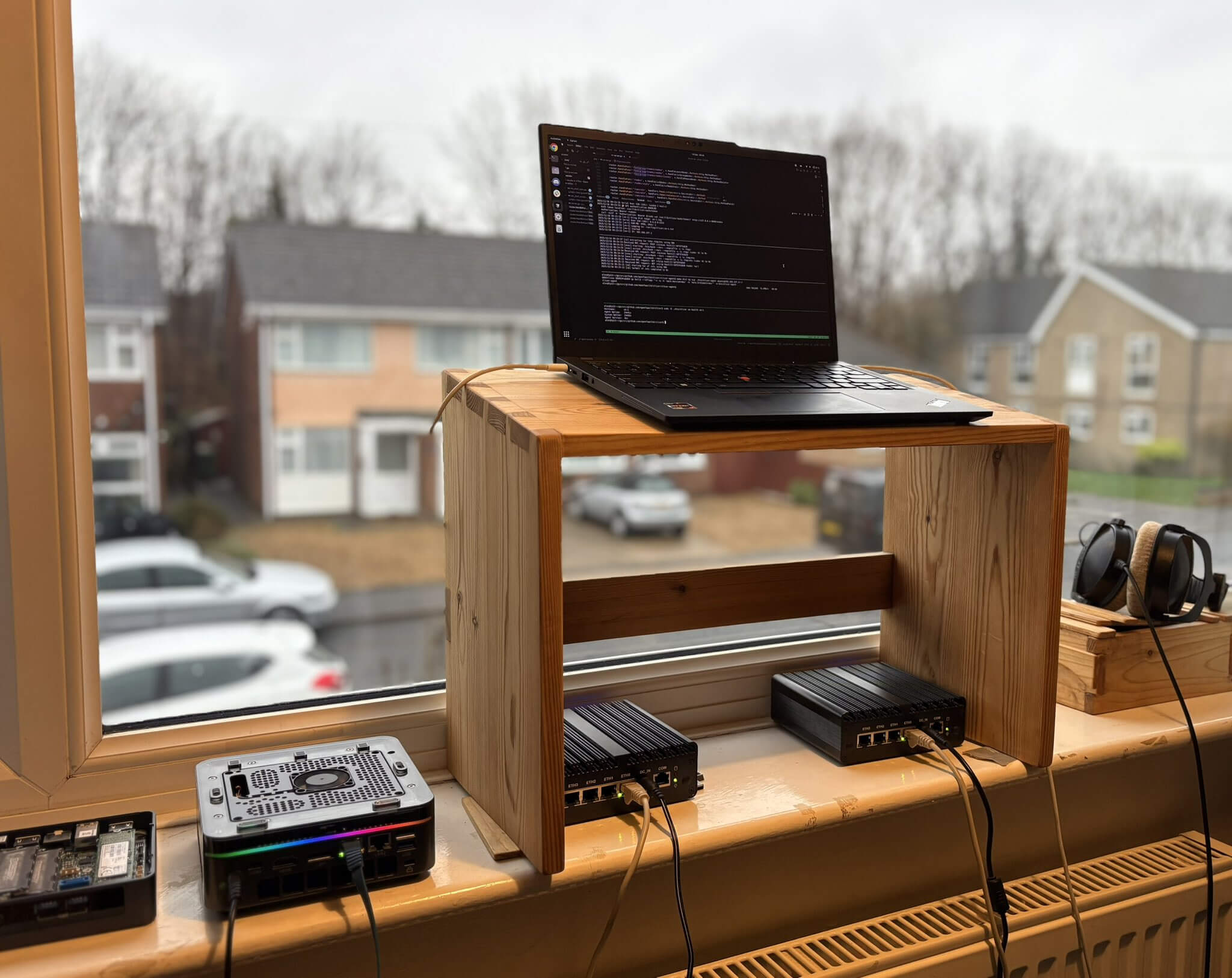
Slicer has been used as an internal tool by our team at OpenFaaS Ltd since 2022 largely for testing new features and supporting customers with our products.
The public release in October opened up the tool to new use-cases and personas like the homelabs and AI agents.
- Secure bootstrap of trust with secrets shared over VSOCK
- Custom Kubernetes autoscaler for Firecracker
- Jenkins Cloud Plugin to run every job in a microVM
- Native
cpAPI to transfer files between any client and the VM - Native
execsupport with streaming JSON output to run bots, automation tasks, and coding agents - Rocky Linux support - test your product with a Debian and RHEL-like OS
- Fine-grained memory support, specify memory in bytes rather than just GB
- ZFS support to launch a VM almost instantly, without any copying of the disk image
- Feature rich Go SDK
- VFIO commands via
slicer pcito explore, bind, and unbind PCI devices - Nested Virtualization support for AMD and Intel CPUs
- Native port-forwarding API, to access private services running within VMs
What Slicer Test Pilots are saying
A brave and curious group of individuals from managers, to VPs, to hackers took out a subscription for Slicer to kick the tires and see what it could do. From the feedback we've seen so far, they were not disappointed.
Alex P
Alex P was the first person to launch Plex and Pihole with Slicer on his powerful Geekcom mini PC.
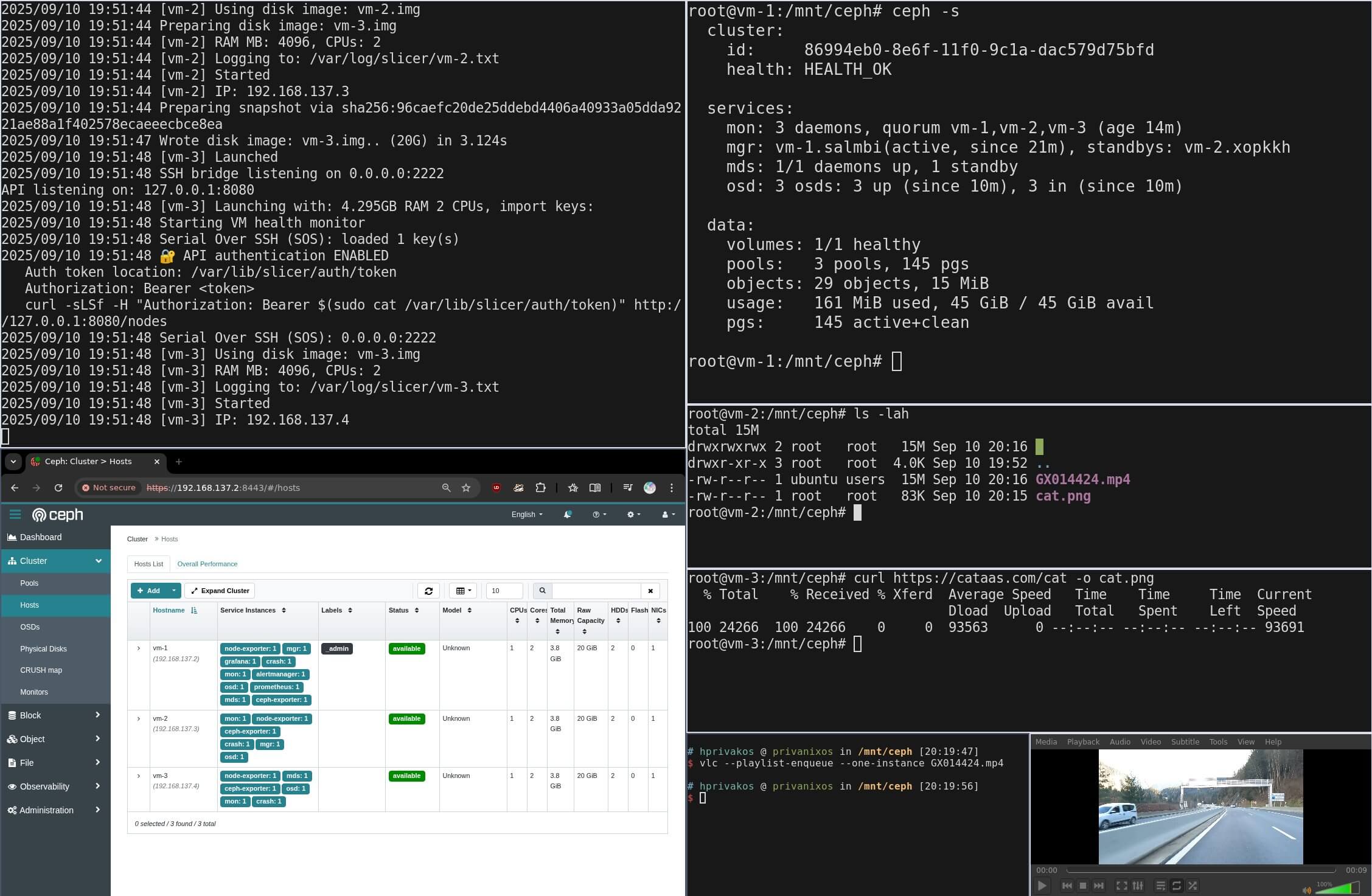
HPrivakos
Learning about Ceph clusters using micro-vms created with SlicerVM.
Ulrich Schreck
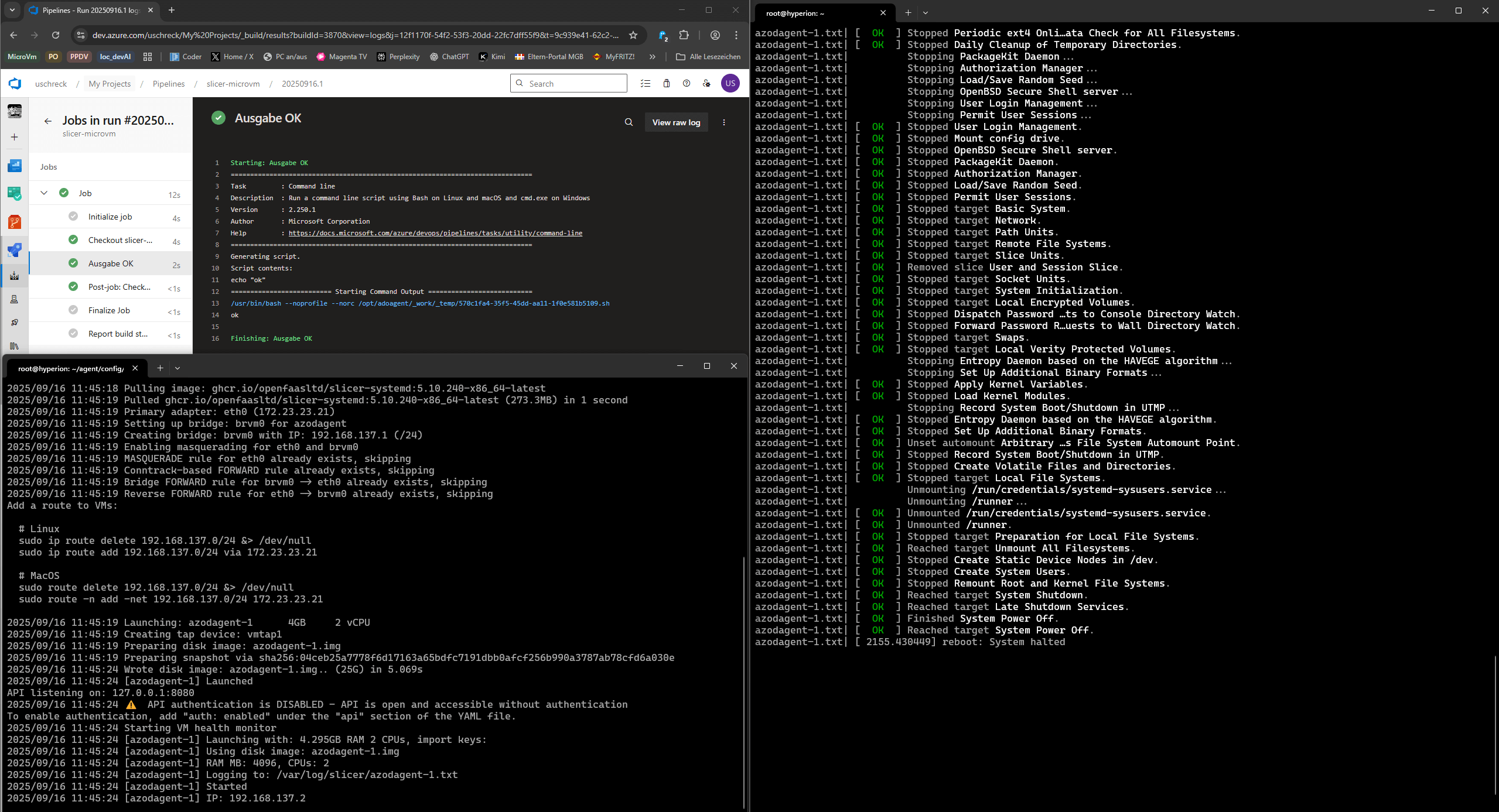
Slicer is a great tool. No more Docker in Docker. It can run Azure Devops Agents and it also runs in WSL. https://slicervm.com/
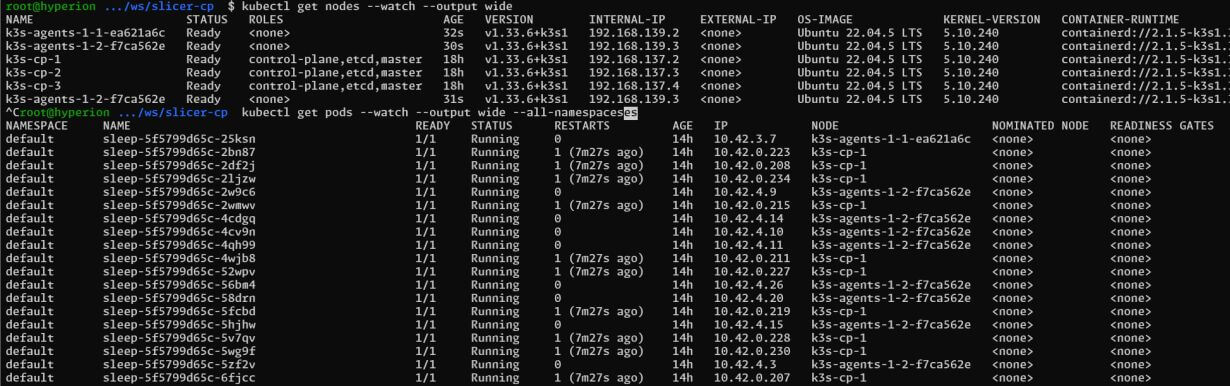
"Slicer is a great tool. With the k8s autoscaler using Firecracker microVMs you can build massive clusters at home." Ulrich Schreck
Jason Poley
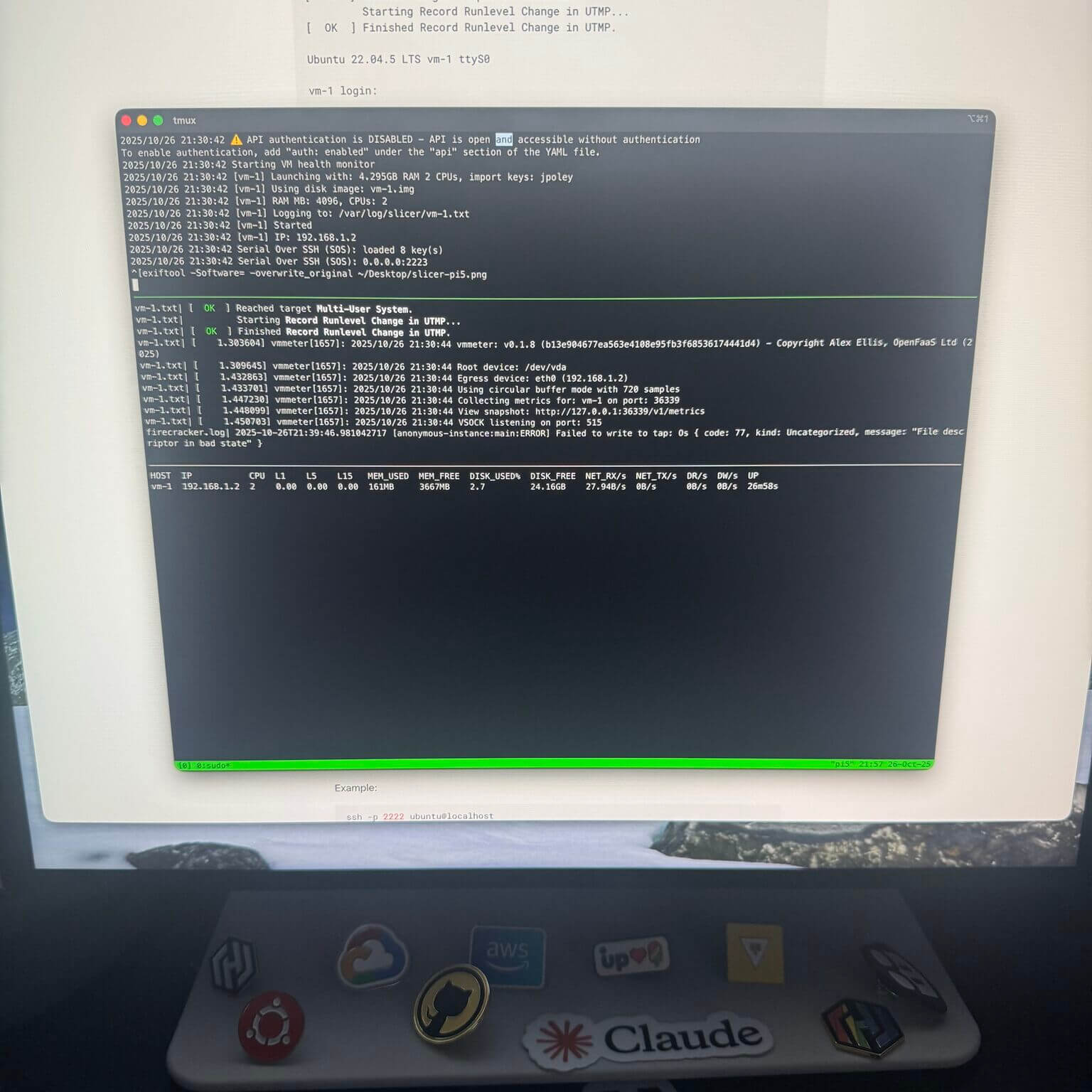
slicervm.com is one of the most underrated project that everyone should try. Jason Poley, Head of Engineering / Managing Director at Macquarie Group
German Arutyunov
German Arutyunov took to Slicer like a fish to water. He made use of the included free license for OpenFaaS Edge, and for K3sup Pro to build out his own set of labs based upon our examples.
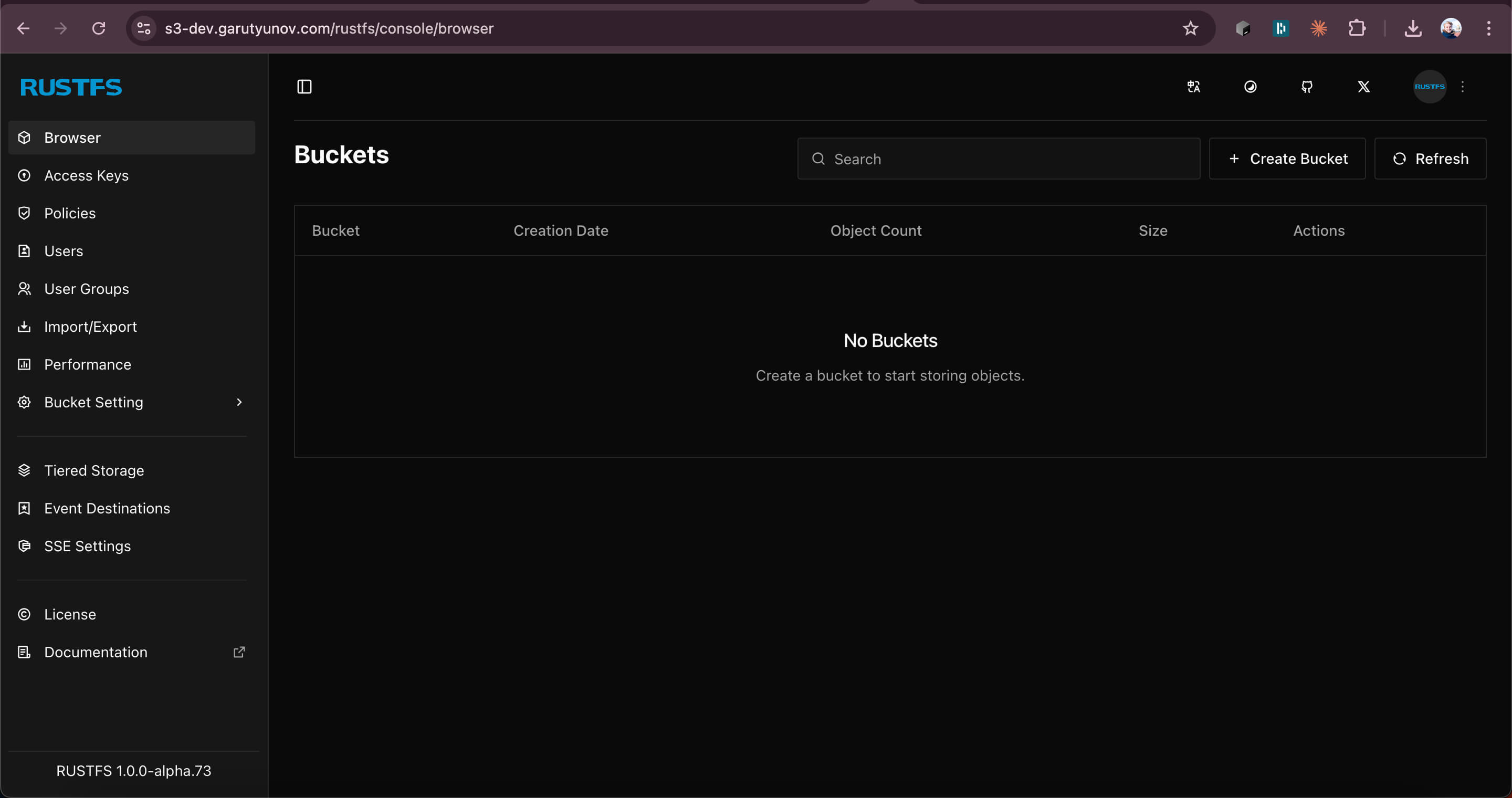
German Arutyunov's S3-compatible object store
You can find out more in his GitHub repo including RustFS (a replacement for Minio), Gitea and a Gitea job runner, Crossplane, Buildkit and Postgresql. His examples use the Mage task runner to setup and deploy the various labs as and when he needs them.
Han Verstraete
Han works on Slicer alongside our other products like OpenFaaS and Actuated.
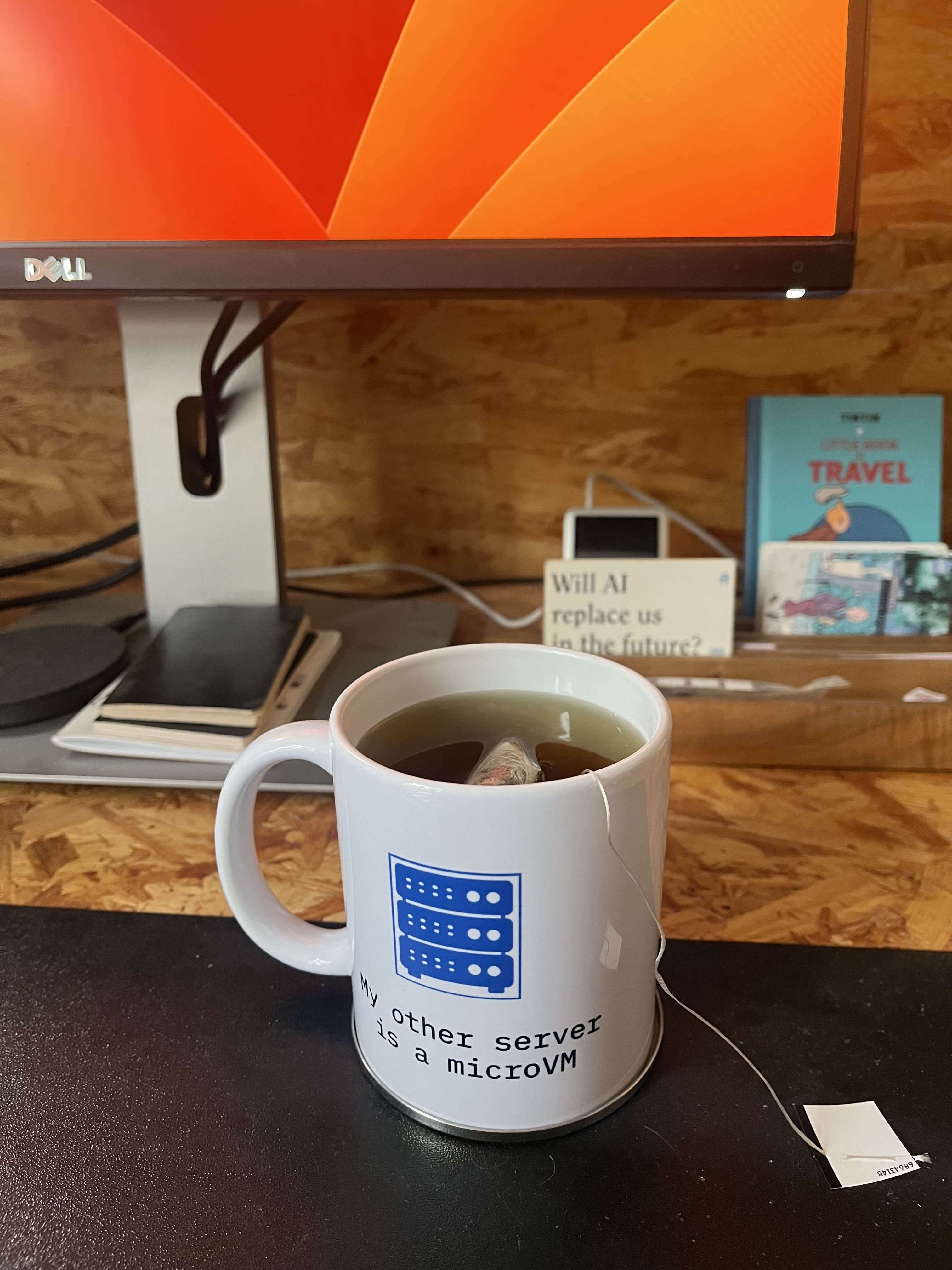
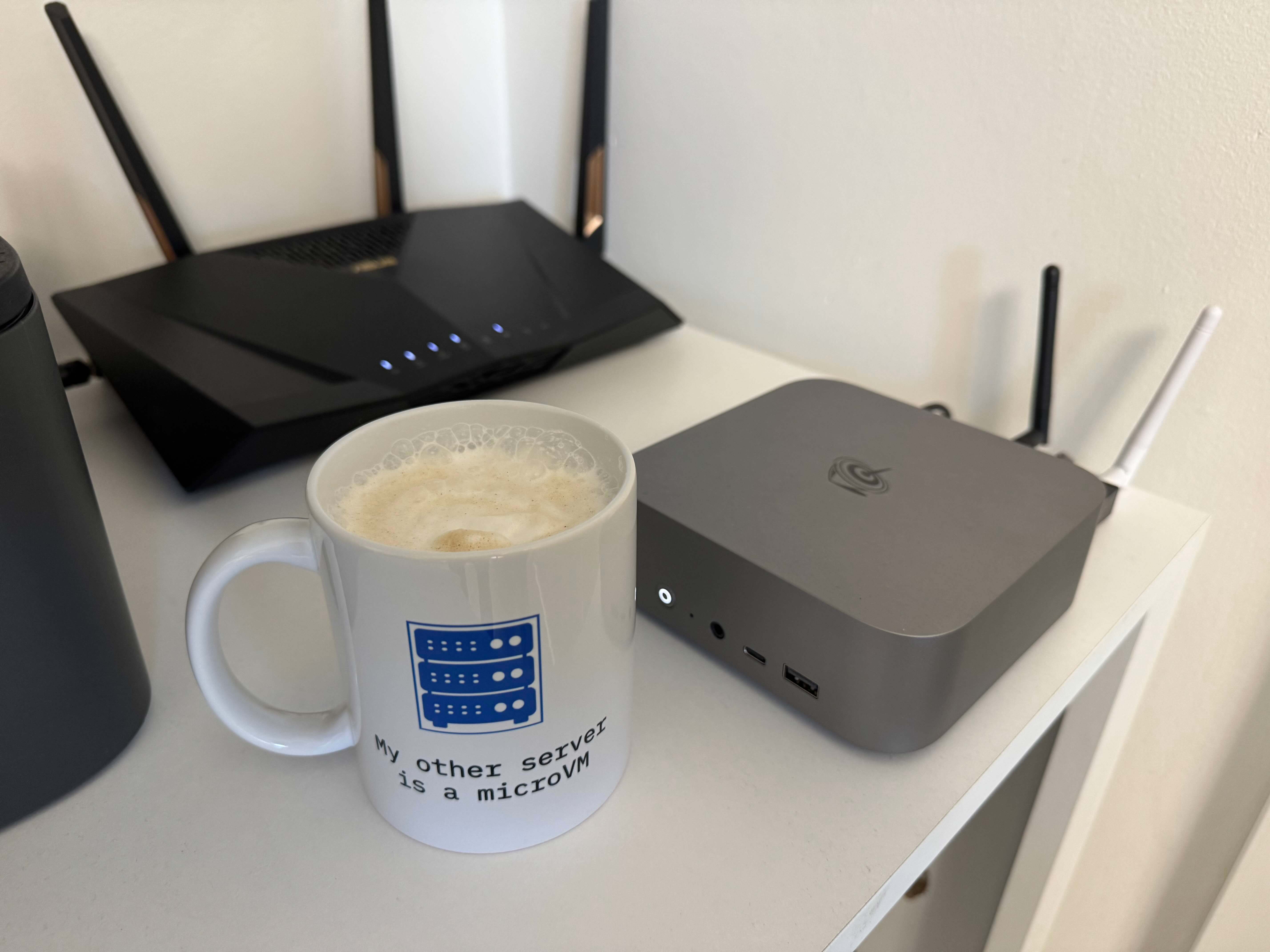
I prefer coffee, but Han's work is powered by herbal tea.
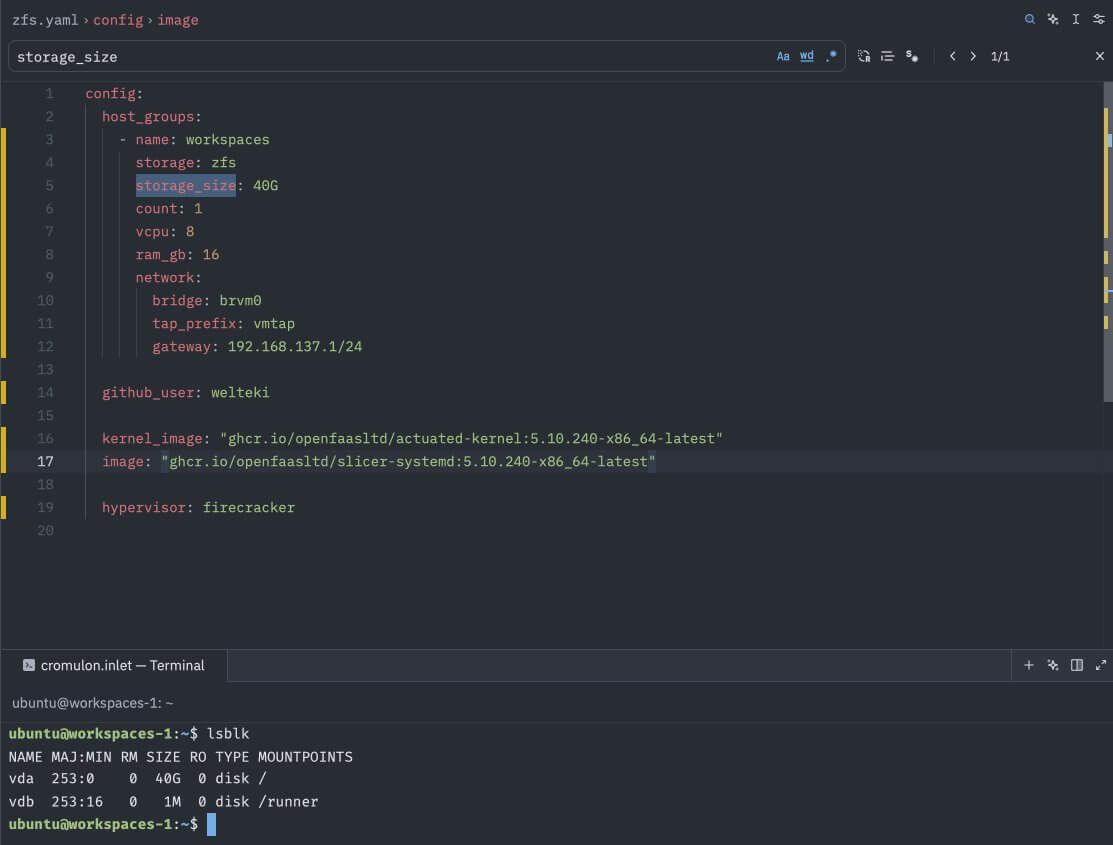
Han adding ZFS snapshot support for instant cloning of VM images.
What's next?
Slicer's first cohort of users have received a limited edition Slicer Test Pilot mug, and have given us some great feedback via the Discord Server.
If you'd like to try out Slicer, you can do so via the Slicer website with the Individual tier for personal and commercial use, or Team/Platform for your team.
We're just scratching the surface of what you can do with Slicer, but the best way to think about it is as:
- A fast and efficient way to launch and scale Kubernetes clusters
- The easiest and best supported way to make use of Firecracker and microVMs
- A great way to introduce autonomy and control back into your life
- Perfect for testing new builds of a product or application
- Just as well suited to short-lived API-driven tasks as it is for long-lived production servers